Most parents think that a child who can hold a conversation is socially adept. They’re wrong. True social mastery, the kind that builds lasting friendships and navigates complex group dynamics, is far more nuanced. It’s not just about talking; it’s about listening, empathizing, and understanding unspoken cues. Developing robust child social skills is a lifelong journey, starting in toddlerhood and continuing through adolescence, and it’s a journey we can actively guide.
The Foundation of Friendship: Early Social Skills
Why Early Interaction Matters
From the moment they’re born, babies are wired for connection. Their early interactions, even with just a parent or caregiver, lay the groundwork for everything that follows. Think about a newborn’s coos and smiles – these are their first attempts at social engagement. These seemingly simple exchanges are building blocks for understanding give-and-take, a fundamental aspect of healthy social relationships.
By the time children reach toddlerhood, their world expands, and so does their capacity for more complex social skills development. They start observing other children, mimicking behaviors, and experiencing the thrill of parallel play. This stage is crucial for learning to share, take turns, and manage the inevitable frustrations that arise when desires clash. It’s a messy, beautiful process, and it’s perfectly normal for toddlers to struggle with these new social demands.
Recognizing Playdate Readiness
One of the biggest indicators that a child is ready for more structured social interaction, like a playdate, is their interest in other children. Do they watch them with curiosity? Do they try to join in, even if it’s just by standing nearby? These are positive signs. Another key marker is their ability to engage in simple pretend play, which shows they can understand and follow social scripts.
You might also notice a child’s growing independence. Can they separate from you for a short period without excessive distress? This doesn't mean they won't miss you, but a healthy level of comfort with separation is a good indicator of preparedness for playdate readiness. We're not looking for perfection here; we're looking for a willingness to explore and engage beyond the immediate comfort of a parent.
Toddler Social Skills: The Building Blocks
For toddlers, essential social skills include making eye contact, responding to their name, and showing basic empathy, like offering a toy when another child is sad. Simple imitation is also a huge part of their learning process. If you can model sharing, kindness, and problem-solving, they are far more likely to absorb these behaviors.
Navigating the Playdate Landscape
Preparing for Playdates: A Parent's Role
Preparing for playdates isn't about rehearsing lines; it's about setting the stage for success. Before the playdate even begins, have a brief, positive chat with your child about what to expect. Keep it simple: "You're going to play with [friend's name]. You can share toys, and you can take turns on the swing." This gentle introduction helps manage expectations and reduces anxiety.
Consider the environment. A familiar setting can be less intimidating for a child still developing their social skills. If it’s your home, have a few toys readily available that encourage interaction, like building blocks or a play kitchen. For younger children, keeping the first few playdates short and sweet – perhaps an hour – can prevent overstimulation and meltdowns. It’s about quality over quantity when first introducing child social interaction.
Teaching Social Skills Through Play
Here’s the thing: children learn best through play. Instead of lectures, use everyday moments to teach. If you’re playing with your child, model how to offer a toy. "Would you like to have a turn with the red car?" Narrate your own social interactions. "Mommy is going to share her cookie with Daddy." These small, consistent actions are powerful.
Role-playing can also be incredibly effective. Use stuffed animals or puppets to act out common social scenarios. What happens when someone doesn't want to share? How can you ask nicely? This provides a safe space for children to practice different responses without real-world consequences. This is a far more engaging way to foster social skills development than simply telling them what to do.
Playdate Etiquette for Kids: Simple Rules
Playdate etiquette for kids doesn't need to be complicated. Focus on a few core principles: being kind, taking turns, and using polite words like "please" and "thank you." Teach them to ask before taking a toy and to offer it back when they're done. It's also important to encourage them to listen when others are speaking, even if it's just a short sentence from a peer.
When Social Skills Seem to Lag
Understanding Signs of Social Difficulty
You know your child best. If you're noticing consistent patterns of difficulty in social situations – frequent conflicts, withdrawal, or an inability to join in play – it’s worth paying attention. This could manifest as a child who always wants to play alone, struggles to make eye contact, or has trouble understanding social cues, like when someone is playfully teasing versus being mean. These are signs that their child social skills might need a little extra support.
It's important to differentiate between a shy child and one who is genuinely struggling. Shyness is a temperament, a preference for quieter settings. Social difficulty is a persistent pattern of interaction that causes distress for the child or others. Consulting with a pediatrician or a child development specialist can offer valuable insights and guidance. The National Institutes of Health research on child social skills highlights the importance of early intervention.
Supporting an Anxious Child on Playdates
An anxious child on playdates needs a gentle, gradual approach. Start with short, structured interactions, perhaps with just one familiar child. Stay nearby initially, offering quiet reassurance, and gradually fade your presence as they become more comfortable. Don't force them into situations that feel overwhelming. Instead, celebrate small victories – a shared smile, a moment of cooperation.
Empower them with tools. Teach them phrases they can use, like "Can I have a turn?" or "I don't like that." Having a pre-arranged signal between you and your child that means "I'm ready to go home" can also be incredibly reassuring. This gives them a sense of control in a potentially overwhelming situation. Healthline research on child social skills often points to the benefits of this kind of supportive scaffolding.
When Sibling Rivalry Impacts Social Skills
Sometimes, the dynamics at home can spill over into a child's interactions with peers. Constant sibling rivalry, for example, can sometimes lead to difficulties in sharing, turn-taking, or resolving conflicts amicably. If you're constantly mediating fights between siblings, those learned patterns of aggression or stubbornness might appear in their playdate interactions. Understanding the sibling rivalry definition and its causes is key.
Addressing sibling dynamics is crucial for fostering broader social skills. Teaching children how to navigate disagreements respectfully, even with their brothers and sisters, is a vital form of social training. Resources on sibling rivalry tips can provide practical strategies for creating a more harmonious home environment, which in turn supports better child social interaction outside the home. This also extends to blended families, where step sibling rivalry requires specific attention.
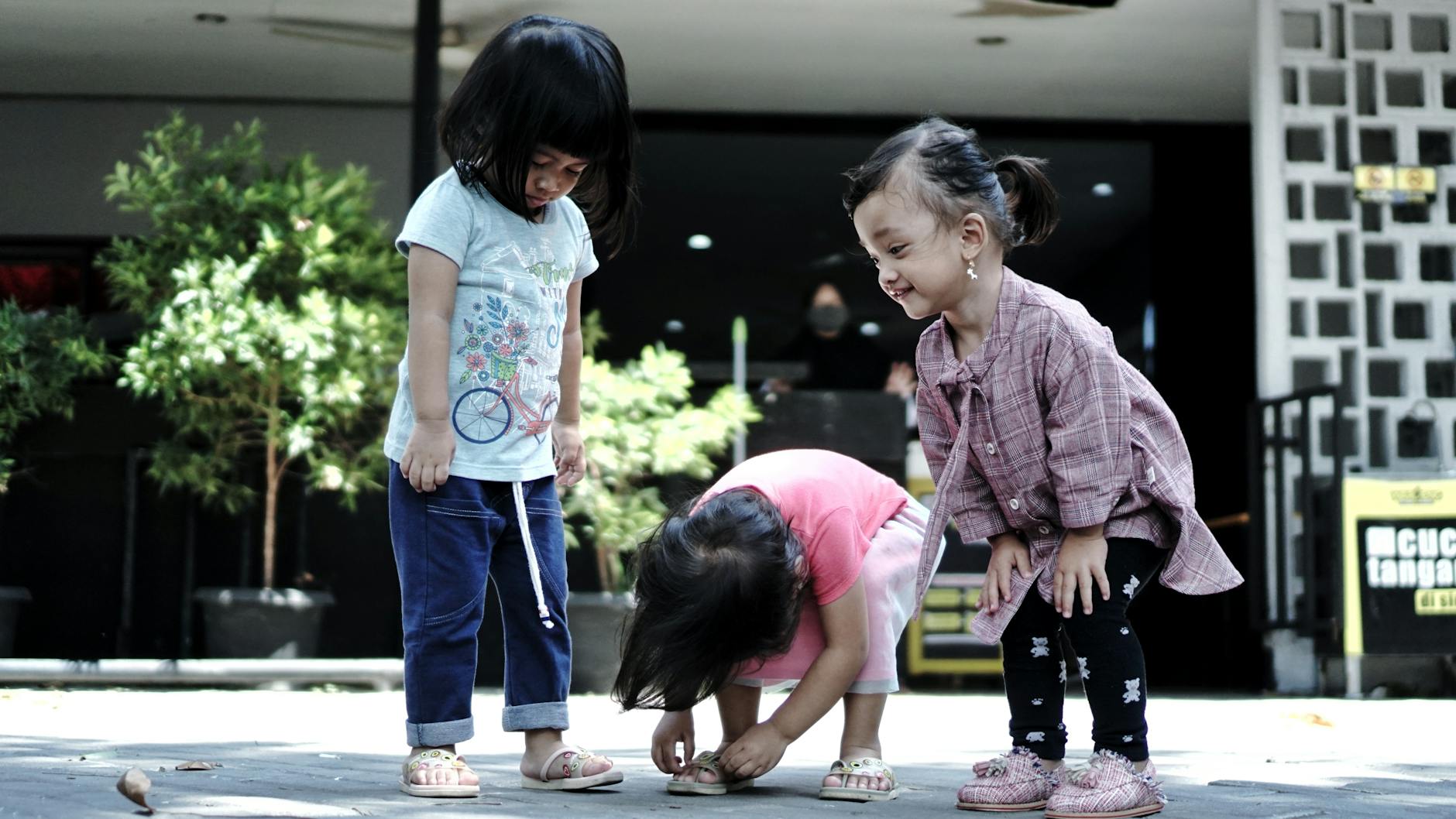
Fostering Independence and Social Growth
The Link Between Independence and Social Confidence
There's a direct correlation between fostering independence in children and their social confidence. When children are given opportunities to do things for themselves, to make choices, and to solve age-appropriate problems, they build a sense of competence. This inner confidence then translates into a willingness to engage with the world, including other people.
Think about it: a child who knows they can tie their own shoes or pack their own snack bag feels more capable. This capability extends to social situations. They are more likely to approach another child or join a game because they trust their own ability to navigate the situation. Look at the research on fostering independence children – it consistently shows positive outcomes for overall development, including social skills.
Encouraging Empathy and Perspective-Taking
Empathy is the cornerstone of strong relationships. Teaching children to understand and share the feelings of others is paramount. You can do this by pointing out emotions in books, on TV, or in real life. "Look, Sarah is crying. I think she’s sad because she dropped her ice cream." Then, encourage them to think about how they would feel in that situation.
Perspective-taking is closely related. It involves understanding that others have different thoughts, feelings, and experiences. Ask questions that encourage this: "How do you think Mark felt when you took the toy?" or "What might he want to do next?" Psychology Today research on child social skills often emphasizes the long-term benefits of developing strong empathetic skills.
The Long Game: Lifelong Social Skills
Developing child social skills is not a race to the finish line; it’s a marathon. What you’re doing now, in these early years, is building the foundation for a lifetime of healthy relationships. Every shared toy, every polite request, every act of kindness contributes to a child’s social toolkit.
Continue to model positive social behaviors yourself. Let your child see you interacting kindly with others, resolving conflicts respectfully, and showing genuine interest in people. Your actions speak volumes, often more than your words. The journey of social development is ongoing, and your consistent, loving guidance is the most powerful tool your child has.